Why the Global Vacuum Cleaner Industry Is Concentrated in Suzhou and Ningbo
Industrial Clusters, Positioning Differences, and Development Trajectories
1. A Tale of Two Hubs
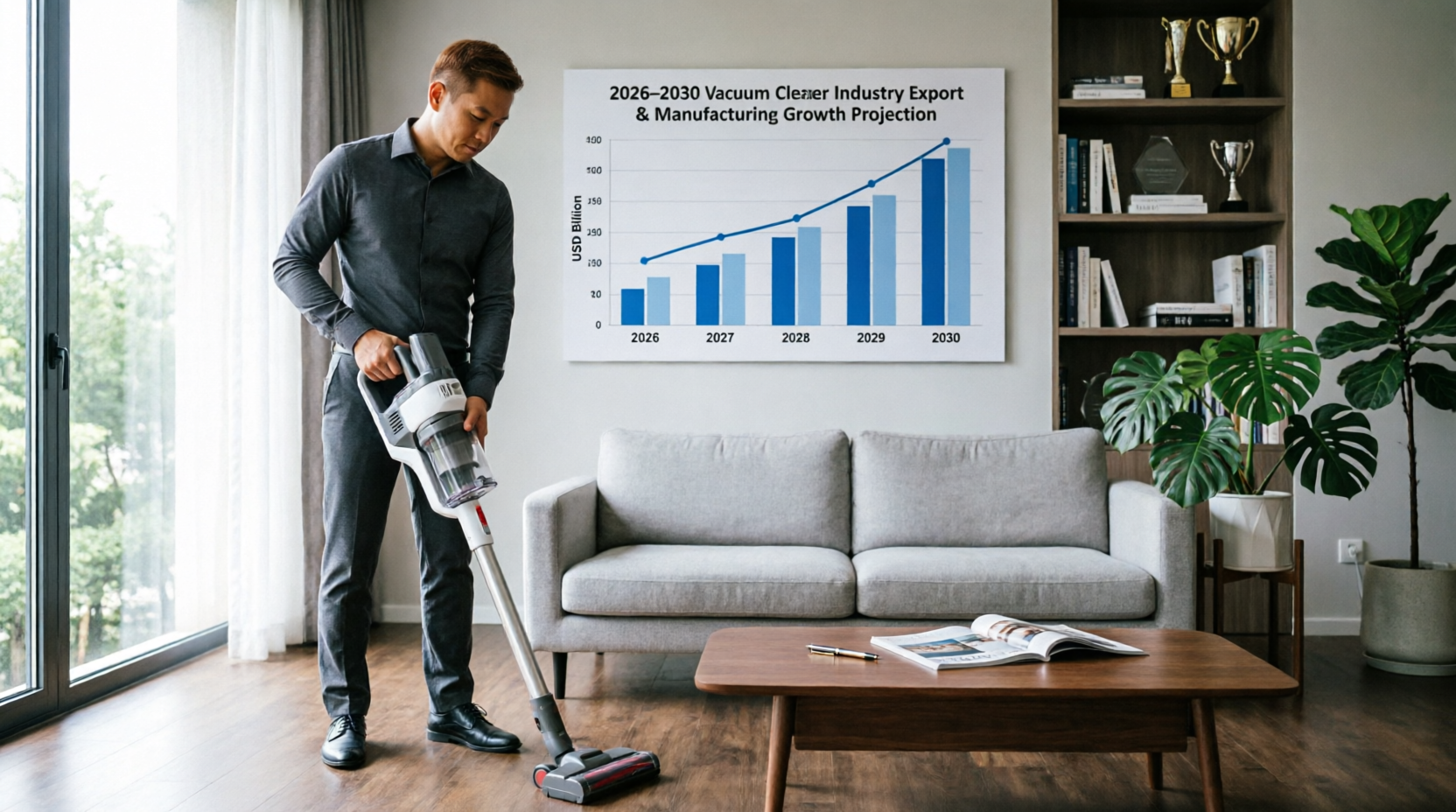
Global cleaning appliances are undergoing a quiet but profound shift. According to a June 2025 report from Maigao Securities, the worldwide vacuum cleaner market will grow from $28.2 billion in 2023 to $38.3 billion by 2029, a compound annual rate of about 5%. Within that expansion, China’s manufacturing muscle has become decisive. CIC Consulting puts global sales volume at 147 million units in 2022, rising to 171 million by 2027.
Where are those machines made? Two Yangtze River Delta cities — Suzhou and Ningbo — account for the lion’s share. Industry estimates suggest that Suzhou and its surrounding area alone produce roughly 70% of the world’s cleaning appliances, forming a tightly integrated R&D-production-sales ecosystem. Suzhou churns out over 70 million vacuum cleaners a year. Ningbo, with its formidable OEM export capacity, is the other pillar. Meanwhile, a third force has emerged: Shenzhen, where cross‑border e‑commerce sellers are rewriting the rules of brand‑building and distribution.
Suzhou Houseclean Electric sits squarely inside this ecosystem, delivering vacuum cleaner products and OEM/ODM services to global customers by drawing on the region’s deep supply chains and engineering know‑how.
2. How It All Began — Starting in Suzhou
The Chunhua Era
China’s vacuum cleaner industry traces back to the 1950s, when roughly 300 commercial units were copied from foreign samples. But the real catalyst was Chunhua, a brand born in Suzhou in 1980. Two years earlier, Suzhou Changjiang Hardware Factory had built the country’s first domestic vacuum cleaner; soon after, the Suzhou Vacuum Cleaner Factory was established, and Chunhua entered the market. During the 1980s, Chunhua became one of Suzhou’s “Four Famous Brands,” alongside Changcheng electric fans, Xiangxuehai refrigerators, and Peacock televisions. In 1986, Chunhua launched China’s first upright household vacuum cleaner and held the largest domestic market share for four straight years.
But Chunhua struggled with a critical component: the motor. All motors were imported; local attempts after buying foreign equipment failed, with motors burning out within minutes. In 1987, Ni Zugen, a former military engineer, joined the Chunhua factory. He pinpointed the root cause: after a vacuum ingests dust, motor speed surges, airflow plummets, and temperatures spike — in extreme cases, the motor gets no cooling air and quickly fries. That insight became the seed for later breakthroughs.
The Spinoffs: Lexy and Ecovacs
After years at Chunhua, Ni Zugen founded Suzhou Jinlaike Electric (the precursor to Lexy Electrical) in 1994, starting with a single assembly line and an ODM model.
Around the same time, Qian Dongqi — then a sales rep at China National Electronics Import & Export Corporation’s Shenzhen office — helped Chunhua sign an OEM deal with a French buyer, spotting export potential. In 1998, he set up Taikeyi Electric (the precursor to Ecovacs) in Suzhou, focusing on OEM for international brands. It grew into a major OEM player.
Lexy and Ecovacs are the two main branches of Suzhou’s vacuum cleaner industry, and both trace their roots directly back to the Chunhua factory.
From OEM to Own Brands
In the early days, most Chinese manufacturers lived on OEM/ODM for foreign brands. Suzhou factories supplied many international names. Gradually, the leaders pivoted: Ecovacs launched its own brand in 2006; Lexy followed with “LEXY” in 2009. By 2024, four of the top five global smart vacuum cleaner shippers by volume were Chinese brands, carving out meaningful share in Europe, Germany, Mexico, and beyond.
3. Why Suzhou and Ningbo? Anatomy of Two Clusters
Suzhou: From Local Brand to Global Powerhouse
- First‑mover advantage — Chunhua created a pool of motor engineers who later fueled Lexy, Ecovacs, and others.
- Supply chain density — Meeting tight specs like 0.01mm motor gap forced Suzhou factories to master precision manufacturing. The city now hosts 36 vacuum cleaner OEM plants — more than any other Chinese city. Together, Suzhou and its periphery account for about 70% of global production capacity.
- Policy support — Local government has used industrial funds and IP services to incubate a number of listed companies.
- Logistics — Close to Shanghai and Taicang ports, Suzhou enjoys easy export routes.
Ningbo: Trade‑Led, Cost‑Driven
- Port advantage — Ningbo Zhoushan Port is one of the world’s busiest by cargo volume, giving Ningbo a natural edge for exports.
- Cost‑first positioning — Ningbo’s small appliance industry began as a “low‑cost substitute” for Suzhou, designed to win orders by slashing costs. That pressure forced supply chains to optimize materials, structures, and in‑house production rates.
- Kinship supply chains — Many Ningbo suppliers operate within tight local networks. This lowers costs but can strain product quality and management. Zhejiang manufacturers are known for high vertical integration (motors, plastic parts, accessories) to squeeze out every penny.
4. Suzhou vs. Ningbo: Two Different Logics
| Dimension | Suzhou | Ningbo |
|---|---|---|
| Positioning | High‑end, technology‑intensive | Cost‑effective, scale OEM |
| Target markets | Europe, North America (premium) | Middle East, Latin America (price‑sensitive) |
| Business model | Own brands + OEM/ODM | Mainly OEM/ODM for export |
| Cost structure | Formal compliance (social insurance, overtime pay) — higher cost | Flexible labor — low‑cost advantage |
| Supply chain | Short procurement radius, tight coordination | High self‑production rate, kinship networks |
| Representative players | Lexy, Ecovacs, Dreame | Fujia, Dechang |
Why global brands still pick Suzhou — Despite Ningbo’s cost edge, most top‑tier international customers stick with Suzhou factories. The reason: reliable delivery, consistent quality, and innovation capability. Those are the non‑negotiables for brand owners planning sales campaigns and marketing budgets.
5. Where Global Brands Are Made
Suzhou: The World’s OEM Workshop
Suzhou’s 36 OEM factories make it the undisputed leader. Lexy Electrical, which took its first Philips order in 1994, has now produced a cumulative 270 million small appliances. For over two decades, Lexy has been a long‑term ODM partner to major international cleaning brands, as have many other Suzhou factories (Bosch, Philips, and more).
Suzhou Houseclean Electric operates in this cluster, offering full‑range vacuum cleaner products and OEM/ODM solutions. It leverages Suzhou’s deep supply chain and engineering talent to deliver reliable, cost‑effective manufacturing for partners worldwide.
Ningbo: Deep‑Seated Customer Ties
Ningbo’s OEM firms are smaller but deeply embedded with specific customers. Fujia Industrial is a primary supplier to Shark (USA) and the largest supplier to Shark’s parent JS Global Lifestyle; it also designs and produces its own motors. Securities research notes that Fujia has been a long‑standing ODM partner for international brands. Dechang has grown quickly since 2023, using motor expertise and overseas production capacity to expand its work with global brands across vacuum cleaners, hair dryers, and motors. As international brands keep expanding SKUs, local OEMs are seeing more new‑product opportunities.
Regional Brand Footprint
Geographically: Guangdong remains a large production base thanks to its complete supply chain. Jiangsu (Suzhou‑Wuxi core) is the high‑tech cluster. Shandong’s Haier focuses on the domestic mid‑to‑low end. Beijing’s Roborock concentrates on high‑end R&D and branding. Among these, Suzhou has the highest technology intensity and brand concentration in cleaning appliances.
6. New Players, New Models
Suzhou: Innovation‑Led Brands
Suzhou is home to incumbents like Ecovacs and Lexy, and a steady stream of new tech‑driven brands.
Dreame Technology — a newer Suzhou brand focused on R&D and sales.
Tineco — founded in 1998, part of the Ecovacs group, holds nearly 400 patents and developed the “Supersonic centrifugal” technology.
Ecovacs reported RMB 16.5 billion in operating revenue for 2024. Lexy held a global vacuum cleaner market share above 19% in 2025. That same year, both Ecovacs and Lexy made the local “Top 100 Private Enterprises” list.
Shenzhen: The Cross‑Border E‑commerce Wave
Shenzhen has become an unexpected force. Not a traditional manufacturing base for vacuum cleaners, it has spawned a generation of cross‑border e‑commerce sellers who excel at platform operations, supply chain orchestration, and reading overseas demand.
-
Explosive growth — AliExpress data show the cleaning appliance category grew 85% in January–November 2025. Chinese brands’ share of North American online vacuum sales hit 35%.
-
Winning strategies — One Shenzhen seller, using market research and industrial cluster collaboration, posted over 60% YoY growth in floor care on Walmart. Another carved out the car vacuum niche, gained traction on TikTok, and climbed to the top ranks in North America.
-
From trading to branding — Most Shenzhen sellers start lean: they don’t own factories. Instead, they integrate supply chains from the Yangtze and Pearl River Deltas and sell directly to overseas consumers via e‑commerce. Some evolved from B2B trading to cross‑border e‑commerce, then to focused smart‑home categories, building brand recognition through “premium product” strategies. One seller used AliExpress’s subsidy program to become a top home appliance brand on the platform within a year, with notable growth in Poland.
Shenzhen’s model is “Shenzhen brand + Yangtze River Delta manufacturing + global market.” It relies heavily on Suzhou and Ningbo for production, while bringing brand building, digital marketing, and consumer insights to the table.
7. Industry Dynamics: Growth, Pain, and the Shift to Brands
Growth, but Slowing
Zhiyan Consulting expects China’s vacuum cleaner market to grow from RMB 38.4 billion in 2023 to over RMB 50 billion by 2025. In the first 11 months of 2024, exports reached 152 million units (+21.9% YoY) for RMB 38.81 billion (+10.7% YoY).
However, the pace has moderated. According to All View Cloud (AVC), the 2025 “Double 11” promotion saw cleaning appliance retail sales of RMB 9.5 billion — down 17% from the previous year, but still 21% above the same period in 2023. The industry has moved from breakneck growth to a “structural growth” phase.
The OEM Trap
Over‑reliance on a single brand client has proven risky. One listed company known for OEM work for high‑profile brands suffered earnings pressure and had to shrink its business. Analysts see this as a symptom of brand customers shifting orders to larger, more scale‑efficient factories as competition intensifies.
Chinese Brands Go Global
Maigao Securities notes that decades of OEM work have built real manufacturing muscle. China is now the world’s largest vacuum cleaner producer, with exports still rising. Clusters have formed across the country, giving companies core component capabilities and patent portfolios. The Yangtze River Delta cluster now covers the entire value chain from motor R&D to final assembly. Cordless handheld models crossed 65% of the market for the first time, and China has become the world’s largest exporter of brushless motor technology.
Complement, Not Zero‑Sum
Suzhou occupies the high‑value end: technology, own brands, engineering depth. Ningbo dominates the cost‑sensitive, mid‑to‑low‑end OEM space — a perfect fit for markets like the Middle East and South America. Shenzhen adds a third layer: e‑commerce native, brand‑first, asset‑light.
These three hubs are not fighting a zero‑sum war. They complement each other. Suzhou provides high‑end manufacturing and innovation; Ningbo delivers scale and cost efficiency; Shenzhen injects speed, branding, and direct consumer access. Some Shenzhen sellers have even set up subsidiaries in Suzhou to coordinate operations and manufacturing.
8. Outlook
The global concentration of vacuum cleaner production in Suzhou and Ningbo is no accident. It stems from historical roots (the Chunhua lineage), deep supply chains, geographic advantages, and — crucially — two distinct industrial logics that have co‑evolved. Suzhou grew into a high‑value innovation hub. Ningbo built a low‑cost, high‑volume export machine. Now Shenzhen is adding a new playbook: digital‑native brands, powered by Suzhou and Ningbo’s factories.
Looking ahead: Suzhou must keep pushing core component technology and smart manufacturing. Ningbo needs to move up the value chain while preserving cost discipline. Shenzhen must deepen its supply chain integration and evolve from pure trading to genuine product capability. The industry has entered a phase of structural growth, where scale and technology separate the leaders from the rest.
Suzhou Houseclean Electric remains a committed partner to global customers, offering end‑to‑end vacuum cleaner products and OEM/ODM services — backed by the full strength of Suzhou’s world‑class manufacturing ecosystem.
This document contains copyrighted material of Suzhou Houseclean Electric and references to third-party information which is not claimed as proprietary!
References
- Maigao Securities Co., Ltd.: Household Appliances Industry In‑depth Report: Steady Growth in Overseas Demand, Chinese Cleaning Appliance Brands Leading the Market, June 2025
- Dongfang Securities Co., Ltd.: Monthly Small Appliance Tracking: AI and High‑end Positioning Become Main Innovation Themes, June 2026
- Zhiyan Consulting: China Vacuum Cleaner Industry Market Operation and Future Development Trend Report (2025 Edition), June 2025
- CIC Consulting: 2025‑2031 China Vacuum Cleaner Industry Regional Sub‑market Research and Investment Risk Study and Forecast Report, 2025
- All View Cloud (AVC) online monitoring data, “Double 11” 2025 promotion analysis
- Industry comparative analysis (Suzhou‑Ningbo positioning differences), December 2025
- China cleaning appliance supply chain research reports, June 2025
- AliExpress cleaning appliance category export data, December 2025
- Baidu Baike entry for “Chunhua” and other public sources
- Suzhou News Network: From “Chunhua” to “Lexy”: The Legend of “Suzhou Manufacturing”, August 2020
- Dongwu Securities Research Institute: Ecovacs transformation materials
- Public vacuum cleaner OEM factory lists